The United States once again failed in its attempt to force regime change in Venezuela and extinguish the growth of socialism in South America. Therefore, it reverted to its old and unsuccessful tactic to destabilize the nation through sanctions.
Even the US business magazine Forbes expressed surprise at the reimposition of US sanctions on Venezuela’s gold sales and its threat to do the same with oil. The oil sanctions especially, if reinstated, would precipitate higher gas prices and further debilitate the Venezuelan economy, forcing more people to leave the country out of economic necessity.
The Venezuelan government, for its part, has not been contrite. Vice President Delcy Rodríguez protested “the wrong step of intensifying economic aggression against Venezuela.” She warned that if Washington takes the threatened measures, Venezuela will cancel repatriation flights returning Venezuelan immigrants back from the US.
Is Biden shooting himself in the foot in an election year with major vulnerabilities from inflation and unpopular immigration? The New Times describes these weaknesses as a “major crisis” for the incumbent US president. Adding to the Democrats’ woes, many Venezuelans in the US – driven here by sanctions –support Republicans.
Barbados agreement temporarily eases sanctions
The State Department accused the Venezuelan government of actions that are “inconsistent” with Barbados agreement, negotiated last October. This accord arranged a prisoner exchange with the US and the issuance of licenses allowing Venezuela to sell some of its own oil and gold. The agreement promised temporary and partial sanctions relief for Venezuela, although major coercive economic provisions were still left in place.
Even with limited sanctions relief, Venezuela anticipated a 27% increase in revenues for its state-run oil company. Experts predicted a “moderate economic expansion” after having experienced the greatest economic contraction in peacetime of any country in the modern era. Venezuela was on the road to recovery.
Then on January 30, the US rescinded the license for gold sales and threatened to allow the oil license to expire on April 18, which could cost $1.6B in lost revenue. The ostensible reason for the flip in US policy was the failure of the Venezuelan supreme court to overturn previous prohibitions on Maria Corina Machado and some other opposition politicians from running for public office.
The Barbados agreement was predicated on “electoral guarantees.” But there was no mention of specific individuals who had been legally barred from running for office due to past offenses. In fact, these cases were well known. Venezuelan officials had repeatedly insisted that those disqualified would continue to be ineligible. According to Héctor Rodríguez, a member of the Venezuelan government’s delegation to Barbados, forgiveness for crimes was never on the negotiating agenda.
The case of opposition politician Maria Corina Machado
Machado’s treatment by the Venezuelan government has arguably erred more on the side of leniency than severity. In most other countries, a person with her rap sheet would be behind bars. In the US, for example, 467 individuals involved in the 2021 Capitol riot have been sentenced to incarceration for offenses far less egregious than Machado’s.
Back in 2002, Machado signed the Carmona Decree, establishing a coup government. Venezuelan President Hugo Chávez had been deposed in a military coup backed by the US. The constitution was suspended, the legislature dismissed, and the supreme court shuttered.
Fortunately for democracy in Venezuela, the coup lasted less than three days. The people spontaneously took to the streets and restored their elected government. Machado, who now incredulously claims she signed the coup government’s founding decree mistakenly, was afforded amnesty.
Machado was subsequently banned from running from public office after she served as the diplomatic representative for Panama in order to testify against her own country. She was also implicated in tax evasion and fraud along with coup attempts. In addition, the hard-rightist had called for a military intervention by the US and for harsh economic coercive measures.
Machado had adamantly refused to contest her electoral ineligibility before the Venezuelan supreme court. But when Washington instructed her to go before the tribunal, she obediently complied. That Machado’s appeal would be denied was “obvious” even to Luis Vicente León, president of the pro-opposition Venezuelan polling company Datanalisis. He explained: “If we are honest, the US government knew full well this was going to happen.”
The New York Times described the supreme court’s decision to uphold her ban as “a crippling blow to prospects for credible elections…in exchange for the lifting of crippling US economic sanctions.” In other words, the Venezuelans did not bow to blackmail and allow a criminal to run for public office.
Venezuelan opposition
Under-reported is how Machado became the unofficially designated opposition candidate according to the corporate press. Normally in Venezuela opposition presidential primaries are run by the national election authorities, as they are in the US. Machado, however, engineered the primary election to be run privately.
The primaries were riddled with irregularities, and other opposition leaders are livid with Machado. Not only did her political alliance (Plataforma Unitaria) omit some opposition parties from the primaries, but voting records were destroyed after the election. This prevented any accounting when some members of her own coalition claimed fraud. Further, the administration of the opposition primary involved Súmate. Machado was the founder and first president of this private non-governmental organization, a recipient of NED funds.
The opposition has lost credibility with even conservative political commentators in the US such as Ariel Cohen, associated with the Atlantic Council and the Heritage Foundation. He describes the US seizure of the Venezuelan-owned oil subsidiary Citgo as part of its "asphyxiation tactics." Handed over to the opposition, they ran Citgo to the ground and used their country’s assets for personal gain.
Sanctions “don’t work”
Washington has a problem. Geoff Ramsey with the Atlantic Council revealingly laments: “How do you threaten a regime that’s endured years of crippling sanctions, multiple coup attempts and a failed mercenary invasion?” The unfortunate Yankee solution is more of what Forbes calls “Washington DC’s heavy-handed response” knowingly causing “enormous” human suffering.
As a recent US Congressional Research Service report admitted, the US sanctions “failed” in their implicit goal of regime change but have exacerbated an economic crisis that “has prompted 7.7 million Venezuelans to flee.” The Hill ran an opinion piece stating that “sanctions are still hurting everyday Venezuelans – and fueling migration.”
Some Congressional Democrats have called for ending US sanctions. Domestic corporations, such as Chevron, have been clamoring to reopen the Venezuelan market. The UN has roundly condemned sanctions, which they call “unilateral coercive economic measures.” Mexico insists that Biden address the root causes of migration. Other governments in Latin America and beyond are pressuring the US to lift sanctions. Meanwhile, experts in international human rights law censure Washington for illegal collective punishment.
Arguably, the US economy would benefit more by promoting commerce with some 40 sanctioned countries than from restricting trade. And the surest remedy for the immigration crisis on the country’s southern border is to end the sanctions, which are producing conditions that have compelled so many to leave their homes. Even US mainstream media has nearly universally concluded that sanctions “don’t work.”
The underlying purpose of sanctions on Venezuela
If sanctions “don’t work,” if they are economically counterproductive, and if they cause so much suffering and ill will, why impose them? The regrettable answer is that sanctions do “work” for the purposes of the US empire.
In 2015 President Obama declared a “national emergency.” Venezuela, he claimed, posed an “unusual and extraordinary threat” to the national security of the US. That was not fake news. The imperial hegemon recognizes the “threat of a good example” posed by a country such as Venezuela. As Ricardo Vaz of Venezuelanalysis observed, Venezuela is “a beacon of hope for the Global South, and Latin America in particular, an affront to US hegemony in its own ‘backyard.’”
Washington’s self-proclaimed “rules-based order” is threatened, especially with the emergence of China as a major world economic power. In the imperial worldview, it is better to have failed states like Libya and Afghanistan than the anathema of a sovereign and socialist Venezuela.
In short, sanctions are a tool to prevent states striving for socialism from succeeding. The US-imposed misery on Venezuela is used by Washington as a cautionary warning of the consequences for a sovereign socialist project in defiance of Yankee domination.
Roger D. Harris is with the human rights organization Task Force on the Americas, founded in 1985.

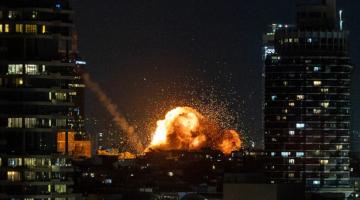
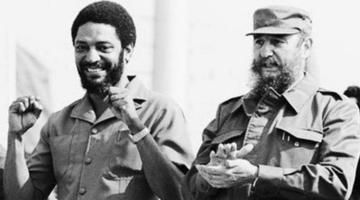
 In this week’s segment, we have an update on the US/Israeli war of aggression against Iran from a journalist reporting from Iran. But we begin with two organizers of the Pan-Africanism Summit Against…
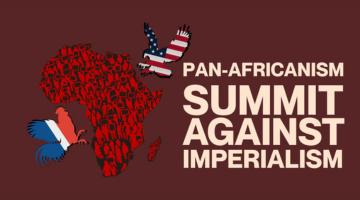 The Pan-Africanism Summit Against Imperialism (PASAI) will be held on May 11 and May 12 in Nairobi, Kenya. It is organized as a counter-summit to the France-Africa summit taking place in Nairobi at…
 Navid Zarrinnal is an Iranian journalist and host of The Colony Archive podcast. He joins us again from Iran to discuss the fragile "cease fire," Trump's threats, the Strait of Hormuz, and how Iran's…
 Beliefs in white supremacy and manifest destiny are at the heart of Donald Trump’s actions and his appeal to millions of people.
 “The ever-scheming European imperialists wisely placed Israel where she could geographically divide the Arab world…and also divide the Africans against the Asians.”