The heartwrenching story of Dr. Khaled Al Serr is a haunting example of the barbarity of the Israeli entity and the strength of the Palestinian people.
Originally published in Electronic Intifada.
Dr. Khaled Al Serr, a surgeon at the Nasser Medical Complex in Khan Younis, recently endured six months as a prisoner in the Israeli military court system. Prior to his seizure, he was in the midst of doing what he could to help during one of the worst humanitarian crises Gaza has ever seen.
“From the moment the war started, I did everything I could to help my people,” Al Serr recalled during an interview in early October. “I couldn’t think about my own safety when so many of my countrymen needed help.”
But in late March, Israeli forces stormed Nasser Medical Complex for the second time during this ongoing genocide. Soldiers forced medical staff, including Al Serr, to evacuate.
Buzzing overhead, drones issued commands to leave the building. Despite wearing his white doctor’s coat and a stethoscope around his neck, clearly identifying him as a medical professional, Al Serr was detained.
“They made us strip our clothes and tied our hands and blindfolded us,” he told The Electronic Intifada. “It was humiliating, but worse than that, they treated us like criminals. We were just doctors trying to save lives.”
Enduring brutal conditions
The soldiers then took Al Serr and the others to a nearby house, which had been turned into a military command center. There, he said, he and his colleagues endured five days of detention under brutal conditions.
“They didn’t give us any food for the first four days,” Al Serr said, “and on the fourth day (in the evening), they brought us a small piece of bread and some cheese, barely enough to stay alive.”
Throughout the ordeal, the hands of the medical professionals remained tied, their eyes blindfolded, as they were subjected to aggressive interrogations and violent treatment, he recalled.
After five days of torment, they were thrown into military jeeps, crammed together like sacks of vegetables.
“They piled us on top of each other,” Al Serr said. “We were treated worse than animals, and the soldiers sat on us, mocking and beating us the entire way to the detention facility at Sde Teiman” in the Negev desert.
The Sde Teiman detention facility, notorious for its brutal treatment of detainees, became Al Serr’s new prison. He described how the prisoners were not only dehumanized but subjected to continuous physical and psychological abuse.
“They tied our hands and blindfolded us. We were not allowed to move, speak or even look sideways. Any small movement resulted in savage beatings,” Al Serr said.
One of the most harrowing aspects of the imprisonment was the sexual abuse and the use of excessive force against the prisoners, he said.
“They would beat us mercilessly, targeting sensitive areas of our bodies with truncheons,” Al Serr recounted. “They even assaulted us sexually, using any means they could to degrade and humiliate us. They sprayed pepper spray on our private parts. It was unspeakable.”
The treatment was a calculated attempt to break the prisoners, physically and mentally.
“I saw them torture an elderly man just because he was moving his lips, reciting the Quran,” Al Serr said.
The cruelty extended beyond physical pain, he pointed out.
The prisoners were only allowed to bathe once a week, and even then, the clothes given to them had been spat on by soldiers. “We had two minutes to shower, and after we were done, we had to wear filthy clothes they had wiped their feet on,” Al Serr added.
Living conditions in Sde Teiman were squalid, with the facility infested by insects and rats.
The detainees were forced to sleep on thin mats over rough concrete floors.
“The cold was unbearable, and we had no blankets to protect us,” Al Serr said. “I lost 40 kilograms [88 pounds] in those few months, barely surviving on a piece of toast and a small serving of jam or cheese every day. It wasn’t enough to sustain a person.”
The prisoners were frequently beaten, especially those who defied the guards’ arbitrary and oppressive rules.
“When the guards felt like it, they would storm the cell and demand that we lie face down with our heads to the ground. Those who disobeyed were beaten with truncheons,” Al Serr said. “Some prisoners told me they were beaten on their private parts with truncheons and electrocuted. They used any method they could to torment us.”
Moved to Ofer Prison
Amid international outcry over the abuse at Sde Teiman, some prisoners, including Al Serr, were moved to Ofer Prison in the occupied West Bank. Al Serr was transferred to Ofer Prison in June.
Though the conditions there were slightly better, the psychological and physical abuse continued. Amnesty International reported he was held there “without charges or trial under the abusive Unlawful Combatants Law.”
“In Ofer, the beatings were less frequent, but the humiliation never stopped,” Al Serr said. “They didn’t give us proper medical care. I had internal bleeding and wasn’t seen by a doctor for over a month.”
Al Serr said that when he was finally given medication, it arrived 10 days after his hospital visit. The lack of food and medical treatment in Ofer Prison mirrored the dire conditions at Sde Teiman.
After arriving at Ofer Prison, Al Serr and his colleagues were sentenced by a military court.
“It was a sham trial conducted over the phone,” he recalled. “We didn’t even know the charges against us. They labeled us ‘illegal combatants,’ captured during the war, and we were given arbitrary sentences until the end of the conflict.”
Worries about family, being released
What weighed most heavily on Al Serr during his imprisonment was the uncertainty surrounding his family. “I was constantly worried about them, especially since they had been displaced during the war. I heard rumors of military operations near Rafah, where they were staying, and I feared the worst,” he said.
Upon his unexpected release on 30 September, likely because he was not considered a threat, Al Serr returned to work determined to continue serving his people despite the trauma he had endured. But when he reunited with his family, they were living in the ruins of their house in Khan Younis.
“We are strong and resilient people,” he said, reflecting on his experience. “This isn’t the end; it’s a testament.”
Fedaa al-Qedra is a journalist in Gaza.



 In this week’s segment, we have an update on the US/Israeli war of aggression against Iran from a journalist reporting from Iran. But we begin with two organizers of the Pan-Africanism Summit Against…
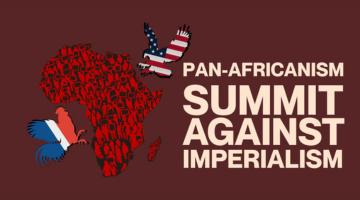 The Pan-Africanism Summit Against Imperialism (PASAI) will be held on May 11 and May 12 in Nairobi, Kenya. It is organized as a counter-summit to the France-Africa summit taking place in Nairobi at…
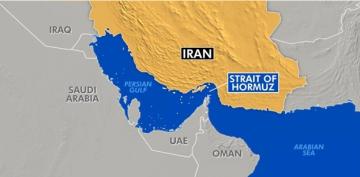 Navid Zarrinnal is an Iranian journalist. He joins us again from Iran to discuss the fragile "cease fire," Trump's threats, the Strait of Hormuz, and how Iran's defense capabilities have frustrated…
 Beliefs in white supremacy and manifest destiny are at the heart of Donald Trump’s actions and his appeal to millions of people.
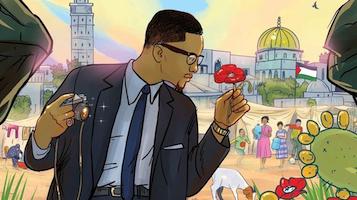 “The ever-scheming European imperialists wisely placed Israel where she could geographically divide the Arab world…and also divide the Africans against the Asians.”