The Instituto Simón Bolívar president places Venezuela’s July 28 presidential election in the global context.
Originally published in Venezuela Analysis.
Carlos Ron is Vice-Minister of Foreign Affairs for North America and heads up Venezuela’s Simón Bolívar Institute, which promotes peace and solidarity among the world’s peoples. In part one of this interview, Ron argued that the US doctrine of Monroeism has been applied to Venezuela with the aim of toppling its government. He also discussed what he calls “Hyper-Imperialism”: an especially aggressive phase of imperialist aggression that has emerged in recent decades. Here, in part two of the interview, Ron discusses the prospects of multilateralism and the upcoming presidential election. He also addressed the challenges ahead for the Bolivarian Process.
In the first decade of the 21st century, we saw the emergence of a broad movement toward Latin American integration. This movement is less robust right now. However, in the new context marked by the decadence of US imperialism, we have seen the emergence of multipolarity initiatives such as the BRICS.
Imperialist decadence – and the violence that it promotes – is being felt around the world. What we have witnessed during the last decade is a struggle between independence-seeking movements, on the one hand, and an extreme right linked to US interests, on the other. The governments aligned with Hyper-Imperialism function as a roadblock against regional unity of the kind that existed under Chávez.
However, as Hyper-Imperialism unleashes its force in Latin America, Africa, and perhaps also in southern Asia, we have seen the emergence of strong economies, such as China’s and also blocs such as the BRICS, which now represent 40% of the world’s population and wealth. In fact, the BRICS represent an economic bloc that is greater than all the G7 countries together.
The shift towards Hyper-Imperialism reflects a changing world. What does this mean? Now countries can cooperate within a non-imperialist block while strengthening each other.
For instance, China does not impose structural adjustments on other nations, as the imperialist block has done historically. Instead, China promotes shared prosperity in a cooperation model that leads to mutual growth. The China model is quite different from the political alignment that the US demands of countries, which in the end weakens them and generates unhealthy competition.
Thus there is now the possibility of a new world order with more balance. In short, while the US promotes unipolarity, multipolarity continues to grow.
Multipolarity is indeed an emerging phenomenon, but it’s promoted mostly by governments or states. By contrast, internationalist and grassroots solidarity movements are necessary to protect processes of social transformation. How do you see the role of such internationalism in the Bolivarian Process?
Internationalism has played a key role in the Bolivarian Revolution. It is a basic principle for us. We have been able to develop people’s alliances throughout Latin America and beyond. How? Our government is connected with the people and with popular organizations at the grassroots level. This gives us moral standing around the world, and it builds solidarity with our process.
We live in a time when it’s important to defend our states in the face of the imperial world order, because neoliberalism, and in particular Hyper-Imperialism, is trying to destroy our states through the promotion of their own “rules-based order.”
But whose rules are we talking about? We are talking about rules that are not decided by a collection of states and much less so by the masses. The US and the interests of capital are the ones making this set of so-called rules, which are tailored to their interests.
That’s why we are committed to strengthening nation-states – not one, but many – in the international community. With that in mind, we helped to create the Group of Friends of the UN Charter, which brings together 20 countries working so that international law – constantly trampled by the US – is respected.
However, as we work to strengthen the role of nation-states, there is a contradiction that emerges. Our project is a revolutionary one that struggles against the bourgeois state. At the same time, we need to defend the state because it is the only means to protect ourselves against Hyper-Imperialism and the only entity that can guarantee the transformations that we want. For the time being, only the state, hand in hand with popular power, can resist US unilateralism and Hyper-Imperialism.
It’s important to maintain an internationalist attitude, which must come from both governments and grassroots. The idea is that there must be people-to-people cooperation and state-to-people cooperation to resist imperialism and move forward. For this reason, the state has to transform itself so that it allows for popular decision-making. I think we are going in the right direction in this regard, but it isn’t easy.
We are just days away from Venezuela’s 2024 presidential elections. Do you have any predictions?
This 25-year-old revolution is going to face, once again, its fascist enemies, which are backed by Hyper-Imperialism. Fascism will attempt to derail our process once again.
However, when you look at the history of the Bolivarian Revolution, and despite all the attacks against the economy – including the “maximum pressure” campaign developed by former President Donald Trump – the people of Venezuela understand that only the Bolivarian government can guarantee social achievements and peace.
There are, of course, different types of opposition in Venezuela, but the one that has backing from the US and gets highly publicized by the corporate media is intrinsically violent. It is telling that this group has not bothered to develop a strategy for winning the elections. If they were trying to do so, they would have chosen a candidate who could run a viable campaign and present a platform.
Instead, they chose a candidate [María Corina Machado] who had been barred from holding elected office. She was eventually replaced by an uncharismatic figure who had no public profile whatsoever [Edmundo González]. All this shows that they have no interest in winning via the popular vote. Instead, they want to promote the idea that our electoral process is not clean and that the results shouldn’t be recognized.
I think that on Sunday [July 28] Venezuelans will go out to the polling centers and the majority will vote to defend the revolution because they don’t want violence. What people want is for the country to grow and continue on the path of emancipation.
What are the main challenges that lie ahead for the Bolivarian Process?
We face many challenges. First, we have to find a way to transform Venezuela’s productive model. This means breaking away from oil dependency – which is bad for the environment and makes our nation more vulnerable to external attacks, such as the sanctions – and we also have to break with dependency.
We also have to deepen the revolution’s democratic model, which expresses itself in initiatives like the communes. Communes are key to our project, but they are still in the making. There’s no pre-established path because each commune is different, but they all share one characteristic: transformation promoted from within a definite territory, through direct democracy. For this to happen, they need to be interconnected and grow. Communes cannot become mere enclaves in society: they must become a model for the whole country.
Additionally, we have to strengthen the process of continental integration by promoting and reactivating more internationalist cooperation. This challenge has a geopolitical dimension. To defeat Hyper-Imperialism, we have to build more just, respectful, and equitable relations among countries in the region. That will contribute to the project of the Bolivarian Revolution, which has much to do with the will of the masses, becoming a roadmap for other countries.
Cira Pascual Marquina is a Political Science professor at the Universidad Bolivariana de Venezuela in Caracas. She is also co‐producer and co‐host (with Chris Gilbert) of the Marxist education program Escuela de Cuadros. She is actively engaged with grassroots organizations in Venezuela and abroad and is dedicated, both as a militant and as an investigator, to communal initiatives.

 In this week’s segment, we have an update on the US/Israeli war of aggression against Iran from a journalist reporting from Iran. But we begin with two organizers of the Pan-Africanism Summit Against…
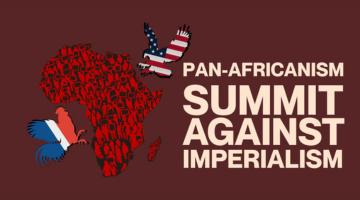 The Pan-Africanism Summit Against Imperialism (PASAI) will be held on May 11 and May 12 in Nairobi, Kenya. It is organized as a counter-summit to the France-Africa summit taking place in Nairobi at…
 Navid Zarrinnal is an Iranian journalist and host of The Colony Archive podcast. He joins us again from Iran to discuss the fragile "cease fire," Trump's threats, the Strait of Hormuz, and how Iran's…
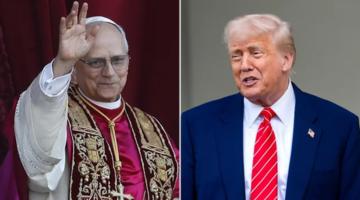 Beliefs in white supremacy and manifest destiny are at the heart of Donald Trump’s actions and his appeal to millions of people.