A lithograph print of the July 3, 1825 landing of French gunboats in Port-au-Prince to demand from President Jean Boyer 150 million gold francs in reparations in exchange for France recognizing Haiti’s independence.
Originally published in Haiti Liberte.
This article discusses Haiti‘s efforts to seek restitution from France for the “Double-Debt” imposed in 1825. After Haiti gained independence in 1804 following a slave revolt, France threatened to invade and re-enslave the Haitian people if they did not pay compensation to French slave owners for their lost “property.” This became known as the Double-Debt, as French and American banks profited by converting the debt into high-interest loans.
In 2003, on the 200th anniversary of Haitian hero Toussaint Louverture’s death, Haiti‘s president Jean-Bertrand Aristide announced his intention to demand repayment from France. This sparked retaliation from France and Haiti‘s elite, who sought to undermine Aristide’s government. A legal team developed arguments that the 1825 agreement was unlawful given the threat of re-enslavement. A draft complaint was prepared but the 2004 coup against Aristide halted the legal proceedings. The article argues that the restitution claim remains legally valid and an important symbol in Haiti‘s fight for justice, despite political opposition.
On Apr. 7, 2003, I was representing the Republic of Haiti when its democratically elected president, Jean-Bertrand Aristide, announced he was requesting reparations from the French government because it had imposed economic sanctions on Haiti in 1825. President Aristide’s announcement came on the 200th anniversary of the death of Toussaint Louverture. The symbolism was not lost on the Haitian people.
The 1825 sanctions, imposed under threat of war and re-enslavement of the Haitian people, were unlawful and unprecedented. Haitians were forced to compensate their former slave masters for ending their slavery. These sanctions impoverished Haiti for the next two centuries. This unlawful conduct was compounded by scandalous acts of French, and later U.S. banks, which profited by converting France’s demand for money into interest-bearing loans for the Haitian people. These bank loans generated significant revenue through hefty interest payments above the “debt” principal and became known in Haiti as the “Double-Debt.”
The political context in which the restitution claims arose can be credited to a continuous effort by Haiti’s elite, the U.S. intelligence community, and so-called friends of Haiti particularly the French and Canadian governments to undermine the democratically elected government of President Aristide. Those efforts intensified after the president’s announcement seeking restitution, but their antecedents were obvious from the beginning of Aristide’s second term.
President Aristide under Attack
On Feb. 7, 2001, Aristide was inaugurated as president of the Republic of Haiti for his second term after winning the popular vote by 92%. Actions were taken to undermine his presidency, however, ultimately resulting in a second coup against him on Feb. 29, 2004.
Immediately after President Aristide’s re-election, Gérard Gourgue, with the Democratic Convergence Party, established a parallel self-declared government. This multi-party government alliance refused to run in the election because it knew it would lose given the overwhelming popularity of Aristide and his Fanmi Lavalas Party. However, this opposition group had the support of anti-democratic forces in the United States that sought the ouster of Aristide.
By July 2001, the first of many commando raids began against Haitian government facilities. By December 2001, ex-soldiers from Haiti’s disbanded military occupied and attacked the National Palace with 50-millimeter weapons.
One year later, the Group of 184, led by André “Andy” Apaid, who carried a U.S. passport and was supported by the International Republican Institute (IRI), was formed in the Dominican Republic. This “group” was seen as an alternative to the Fanmi Lavalas Party and President Aristide. Demands were constantly and routinely initiated against President Aristide, claiming that he should “negotiate” with this unelected group comprised of Haiti’s elite that had the backing of the U.S. intelligence community.
On Jan. 31 and Feb. 1, 2003, U.S., French, and Canadian diplomats met in Canada at Meech Lake, the Canadian government’s conference center, to plan a second coup against President Aristide. The meeting was led by Roger Noriega, who later that year became Assistant Secretary of State for Western Hemisphere Affairs for the United States, Denis Paradis, the Secretary of State of Canada (Francophonie Region), and member of Parliament. The goal was to finally get rid of Aristide, as Vice President Dick Cheney triumphantly stated after the February 2004 coup.
After President Aristide’s announcement on Apr. 7, 2003, stating that he was seeking restitution from France, the French were startled and determined to end any discussion of restitution. At the time, Jacques Chirac was president of France and Dominique de Villepin was France’s foreign minister. France’s initial reaction to the restitution claim was delivered by de Villepin, who stated that France had given 200 million euros to Haiti as part of the European Union’s two-billion-euro in aid to Haiti in recent years. De Villepin’s spokesperson said the problem in Haiti was due not to the Double-Debt, but to “[b]ad governance [and] the degradation of security.”
By October 2003, de Villepin created a committee on Franco-Haitian relations: the Comité Indépendent de Réflexion et de Propositions sur les Relations Franco-Haïtiennes. Véronique Albanel, a professor, philosopher, and sister of de Villepin, was made a special envoy and sent to Haiti from France. Régis Debray, a famed French philosopher and progressive author, was also sent to Haiti as the head of the committee to discuss the matter with the government of Haiti in December 2003. Debray and Albanel, anchors of the French delegation, were instructed not to discuss or even acknowledge restitution, but instead to say France only had a moral obligation to Haiti and that France should cooperate with Haiti in health and education development. For example, I attended a meeting where, in the face of the restitution claim for billions of dollars, Debray countered and suggested that France could establish French language schools for Haitians.
President Aristide Initiates Haiti’s Legal Claim for Restitution
Beyond the legal aspects of the restitution claim, the team and I looked at the political context. At one point, we even contacted people who managed the “debt clock” in Times Square, in New York City, to set up a similar debt clock for Haiti’s debt.
By June 2003, the government of Haiti had established a Restitution Commission and began holding meetings in Haiti on how to proceed. The Restitution Commission decided to work with Günther Handl and the Bichot & Associés law firm in France. Handl was the principal author of the legal theories that Haiti can still rely on today. He wrote a detailed memorandum of law on Nov. 7, 2003, addressing the issues of restitution. That month, the commission established a legal theory which was the principal basis for impugning the validity of the 1825 Agreement between France and Haiti, in which Haitians were required to pay their former slaveholders. The theory was one for contractual restitution and not simply reparations. The restitution claim was grounded in the international illegality of the conditions under which the 1825 Agreement concluded the threat of re-enslavement.
At first, the major obstacles to instituting the legal claim were identifying who the plaintiffs might be and a forum in which to bring such a suit. The commission debated whether it could bring suit on behalf of families of former enslaved persons, as well as whether the Haitian government could initiate claims against French banks or against the decedents of French citizens who received the sanctions paid by Haitians. Regarding a forum, the Bichot firm indicated that the Republic of Haiti might be able to file a claim for restitution in a French court against the Republic of France. But after extensive research, the firm decided that the Haitian state could not bring the suit in a domestic French court. Thus, the main question became whether there was a viable international forum. The International Court of Justice was not available because France was not a signatory. The commission members then discussed the potential of using the Cotonou Agreement to create a partnership agreement between Haiti and France.
By January 2004, the commission had drafted a complaint, but was still trying to determine where to bring the action. By February 2004, the commission offered to retain the Bichot firm in France. However, at the same time, the political efforts to destabilize and ultimately destroy the democratically elected government were rapidly escalating.
Coup to Quiet the Restitution Claim
As part of the disinformation and destabilization campaign launched against President Aristide, the so-called intellectuals and business leaders in Haiti attacked and dismissed the idea of restitution, calling it a joke and without any basis. The French Committee, led by Debray, wrote a report characterizing the debt demand as “hallucinatory accounting;” that noone in the democratic opposition in Haiti takes the matter seriously and that the desirable consequence would be for Aristide to step down. French president Chirac’s ambassador, Yves Gaudeul, warned of the “imminent political storm,'” stating ” even if the sky seems blue . . . Hang on tight.” Likewise, both Albanel and Debray acknowledged that at various times, they delivered threats to President Aristide and told him that he would be removed unless he dropped the restitution claim.
On Feb. 5, 2004, a military force led by Louis Jodel Chamblain, the former head of FRAPH, a right-wing paramilitary death squad in Haiti, equipped by the United States and trained in the Dominican Republic, began an insurgency in Gonaïves, Haiti. By Feb. 29, 2004, the coup was complete, and President Aristide was forcefully removed to the Central African Republic. The draft complaint for restitution disappeared.
In March 2004, Gérard Latortue, a Haitian exile living in Boca Raton, Florida, was quickly appointed the new Prime Minister of Haiti. Latortue’s perceived strength was courtship of neo-conservatives in Washington, including those in the Pentagon. He had never previously been elected to any public office in Haiti. After the coup against President Aristide, one of Latortue’s first acts was to announce to the French government in mid-April 2004 that Haiti’s pursuit of the restitution claim “is closed” and had been “illegal, ridiculous and was made only for political reasons.” Just four months earlier, Latortue told the Miami Herald that restitution to Haiti was “the moral and politically responsible thing to do.”
Today, Haiti still suffers from the impoverishment brought by the Double-Debt and France’s unlawful conduct in 1825. However, the legal claim for restitution remains valid and viable.
This December 2023 article is reprinted from the University of Miami Inter-American Law Review. The footnotes have been removed with some replaced by hyperlinks in Haïti Liberté’s online version. Ira Kurzban is the founder of Kurzban, Kurzban, Tetzeli & Pratt P.A. in Coral Gables, Florida. He acted as Haiti’s counsel between 1991 and 2004, representing the country during the governments of former presidents Jean-Bertrand Aristide and René Préval. In 2003, then-President Aristide directed Kurzban to explore and initiate litigation on behalf of the Haiti to seek restitution against the French government for the Double-Debt. Much of the information in this article is first hand knowledge from Kurzban’s service as counsel to Haiti.





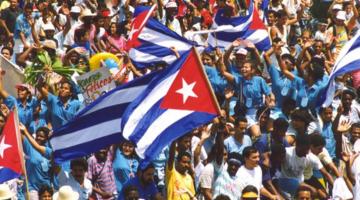 Condemnation of the U.S. blockade against Cuba must be translated into acts of solidarity to defend the nation that has done so much for the world.
 In this week’s segment we hear about Cuba, the challenges of Caribbean unity, and resistance to U.S. efforts to destroy the revolution. But we begin with Iran and discuss how its defense capabilities…
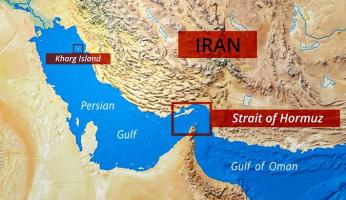 Iran is a more formidable foe than the US anticipated. The U.S. goal of regime change failed because of Iran's military power and determination to defend itself. In Washington the "Secretary of War"…
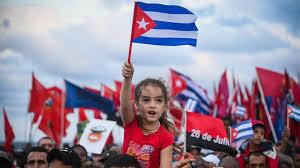 The United States has attempted to defeat the Cuban revolution from its earliest days and for more than 60 years has embarked on sabotage, economic coercive measures, and now a three-month long…
 It’s up to Americans to stop the Trump administration from using U.S. power to strong‑arm Brazil and interfere in their elections.