Fidel Castro warned of a scenario in which Cuba would have zero oil, zero imports, and zero outside assistance. That contingency plan is no longer theoretical. It's being implemented in real life by the latest attack from the U.S.
Originally published in Resumen English.
Option Zero was the revolutionary government’s contingency plan for the moment of total blockade from abroad and, therefore, the absolute lack of oil in the country.
On July 26, 2010, in the small theater of the José Martí Memorial in Havana, a convalescent Fidel Castro, dressed in olive green and recovering from several operations, walked down the aisle greeting those in the nearby seats. He said conspiratorially to the woman sitting next to me: “There’s Rosa Miriam… Do you know that one day she asked me if we were going to survive the Special Period?”
He had just recalled an afternoon in 1990, 20 years earlier, when, as a newly graduated journalist, I was assigned to report on a routine event at the Center for Genetic Engineering and Biotechnology (CIGB), which Fidel suddenly attended. For more than four hours, he explained what Cubans would experience after the disappearance of the USSR, a historic moment that was called the Special Period because, as the commander-in-chief said at the time, “no one knows what kind of practical problems may arise.”
Cuba lost a third of its gross domestic product between 1991 and 1994, and the U.S. blockade was opportunistically tightened, first by Republican George Bush (senior) and then by Democrat Bill Clinton. Among all the hardships we endured, perhaps the hardest was the epidemic of neuropathy associated with a sharp drop in food intake: from almost 4,000 calories a day to just over 1,000. Real, daily hunger left physical and psychological scars on millions of Cubans that still linger today.
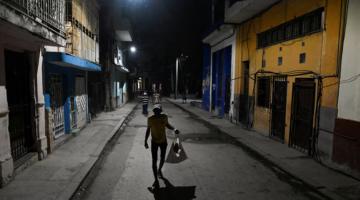
But at the CIGB, on that afternoon in 1990, it was the first time that the Cuban leader described in great detail the harsh economic restrictions that were coming, and there was talk in Cuba of Option Zero. Fidel, who always spoke the truth, was so graphic—communal pots, bicycles and carts as the only means of transportation, blackouts, food rationing more than usual—that we were all in shock. And when he finished speaking and approached the journalists, a passionate question came from my heart: “Do you really think we will survive?”
He explained again that Option Zero was the revolutionary government’s contingency plan for the moment of total blockade from abroad and, therefore, the absolute lack of oil in the country. A strategy was designed for that scenario, and every link in society was organized to maintain a minimum of economic activity, as well as vital education and health centers, with provisions for an even worse situation: that of military aggression. The people would even be trained to survive without water and electricity for many days.
I remember the patience with which Fidel explained that this plan was not a propaganda slogan, but a defensive planning tool. It psychologically prepared the country for an extreme scenario, sent a signal that the state was organizing itself even for the worst outcome, and expressed an explicit willingness not to capitulate, even under extreme material conditions.
At a recent press conference, President Miguel Díaz-Canel stated that the national survival protocols conceived during the hardest years of the Special Period not only exist, but have been revised, modernized, and are ready to be activated if necessary.
In the 1990s, Cuba faced a sudden collapse without a “manual,” while today it faces a severe crisis with more experience, more tools to withstand shortages, and some technological and sectoral capabilities—including some domestic crude oil—that allow it to resist with greater resilience, although the weak point remains the same core: energy, foreign currency, and imports.
Added to this is the fact that Trump’s sanctions and threats have united the country. When explicit threats become so visible in their daily effects, they leave less room for the idea that “it’s all just a story” and begin to operate like any other pedagogy of violence.
Harassment and pain awaken the survival instinct, generate more solidarity, strengthen social tolerance for extreme measures, and affirm the common sense that a dispute like this is not only domestic, but geopolitical and coercive. Seeing Donald Trump, Marco Rubio, and Miami congressmen celebrate the damage they are doing, while shouting “zero oil, zero remittances, zero food and medicine shipments,” has outraged even the stones in Cuba.
But they do not calculate the powers of history. After I asked Fidel the question in Biotechnology, he spent almost two more hours explaining to me why Cubans would emerge from the Special Period and the Zero Option. He closed with a phrase that answered that question from the heart: “We will survive by resisting, resisting, and resisting. As we have done before.”
Twenty years later, at the José Martí Memorial Theater, Fidel finished his speech and walked back down the aisle he had entered. When he passed by my seat, he paused for a moment: “Did you see, my daughter, that we were able to resist?”
Rosa Miriam Elizalde is a Cuban journalist who is First Vice President of the Union of Cuban Journalists (UPEC) and was a founder of Cubadebate, she is a writer of several books and a regular contributor to La Jornada.

 In this week’s segment, we have an update on the US/Israeli war of aggression against Iran, from a journalist reporting from Iran. But we begin with a discussion with two organizers of the Pan-…
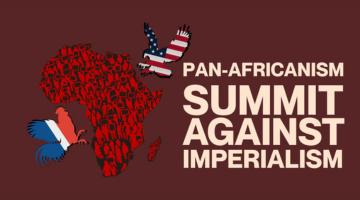 The Pan-Africanism Summit Against Imperialism (PASAI) will be held on May 11 and May 12 in Nairobi, Kenya. It is organized as a counter-summit to the France-Africa summit taking place in Nairobi at…
 Navid Zarrinnal is an Iranian journalist and host of The Colony Archive podcast. He joins us again from Iran to discuss the fragile "cease fire," Trump's threats, the Strait of Hormuz, and how Iran's…
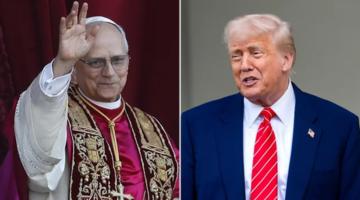 Beliefs in white supremacy and manifest destiny are at the heart of Donald Trump’s actions and his appeal to millions of people.
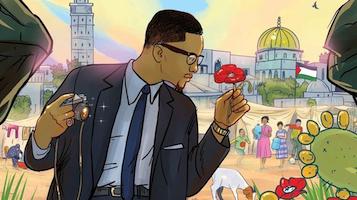 “The ever-scheming European imperialists wisely placed Israel where she could geographically divide the Arab world…and also divide the Africans against the Asians.”