A group of released U.S. Embassy staffers in Tehran hold a press conference on November 19, 1979. Khomeini ordered the release of female and African-American hostages.
Black youth fed xenophobia instead of international solidarity become military pawns who risk their own lives and their people's liberation.
In recent days, Mylo Simmons has given heart-rending interviews about his only child, Master Sergeant Tyler Simmons, who perished along with five other soldiers after a refueling aircraft they were operating crashed in Iraq and rendered them casualties of the satanic imperialist/Zionist war against Iran. If we, as an African community in America, had done our job, would Simmons not only be alive, but also have never considered enlisting in the U.S. military in the first place?
The U.S. military is no place for Black youth. Because the military’s sole purpose is to wage war to advance the interests of imperialism, then ipso facto the military wages war on us. Our community has an intuitive appreciation for that fact. When George W. Bush launched a war against Iraq in 2003, not only did Black people not support that war, but they also made aggressive, affirmative efforts to dissuade Black youth from enlisting. Recruitment rates in the Black community plunged so dramatically that some credit this de facto boycott with bringing the war to an end.
But unless the flow of information about imperialist objectives and strategies is continuous, it is easy for people – particularly young people – to fall victim to the lies concocted to lure them into imperialism’s armed forces. It doesn’t help that bourgeois liberals affirm the propaganda. Too often we have heard these stooges repeat the mantra: “Iran has been at war with the U.S. for the last 47 years” when it is the U.S. that has been waging a war against Iran for 47 years. Although they might also criticize the decision to deploy military personnel without Congressional approval, the real damage is done when they endorse the pretext for the attack.
How different might the perspective of Sergeant Simmons have been if he had been provided with a full historical narrative? In other words, what if he had known that going back 47 years is not going back far enough, and that it is necessary to go back more than 70 years? That was when Mohammad Mosaddegh served as Iran’s prime minister. His efforts to limit and regulate western oil companies’ access to Iranian oil earned his overthrow by the CIA and his replacement by Mohammad Reza Pahlavi, who was widely known as the Shah of Iran. The Shah’s reign was a nightmare. Many thousands were brutalized, jailed and killed by SAVAK, his thug force. Through relentless organizing and pressure, many millions of Iranians were eventually able to drive out the Shah in 1979 notwithstanding the full backing and support he received from the U.S. Consequently, anyone who suggests that the people of Iran need external assistance with changing their government either know nothing of this history, or they choose to ignore it.
But of even greater significance is the fact that after the Shah was toppled, and Iranians occupied the U.S. Embassy and held embassy personnel hostage, they made the wonderful, principled decision to release their Black captives and to also acknowledge the oppression Black people experience in America. We can only hope that Black youth with integrity who are presented with this information will decline military enlistment. Many will, but sadly, the African sojourn in America has exposed our community to spiritual pathogens that have found breaches in our armor of decency, and the infection can potentially distort youthful perspectives.
Specifically, longstanding tensions between Black communities and other ethnic and national groups which in the past burned as mere embers of bigotry have, during the MAGA era, blazed into raging fires of xenophobia in some quarters. Worse still, some Black people distinguish themselves from people of African descent whose families have not been in the U.S. since the slavery era. They call this practice “delineation,” and they call themselves Foundational Black Americans. More generally, anti-immigrant bias is more prevalent now than it was during periods when Pan-Africanism and international solidarity among the oppressed was common.
One consequence of regarding those from other countries as “others” is identity confusion. Notwithstanding capitalism and imperialism’s perpetual war against all people of African descent and the global south generally, a Black person’s misguided belief that the enemies of capitalism and imperialism are also his enemies leads logically to a willingness to enlist in the military and to take up arms to defend the empire.
Remarkably, the animosity towards the “others” is generally based on anecdotes. You can see it in social media posts. “Those Mexicans take our jobs.” “Those Africans look down on us.” “Those people from the Caribbean don’t want anything to do with us until we struggle for something and get it, and then they want to get in on the action.” “Those immigrants say Black Americans don’t have a culture, and then they steal our culture.” It goes on and on.
Clearly, save for a few misguided or confused individuals here and there who say or do offensive things, the anecdotes are demonstrably false. The Iranian release of Black hostages is only one of many acts of solidarity and support Black people in the U.S. have received through the years from beyond the borders. Whether it has been strategy advice from Palestinian youth to Black activists demonstrating in Ferguson, or demonstrated outrage throughout Africa to George Floyd’s murder, or Cuba’s offer of medical assistance to Hurricane Katrina victims, or Venezuela’s offer of free heating oil to indigent Black people in the U.S., the oppressed of the world have stood with Black people in the U.S. through the generations.
But let’s assume for the sake of discussion that oppressed groups from outside of the U.S. are hostile to Black people in this country. That hypothetical circumstance makes absolutely no difference as to the vital need to work with oppressed people all over the world. The single greatest error made by Africans in the U.S. is the use of emotion, affinity, and sentimentality as criteria for political collaboration. Africans’ enemies have never allowed their animosity toward other countries or individuals to be an impediment to collaboration when such is demanded by their political agenda.
Consider that only a few short months ago, the Trump administration spewed an endless stream of hostile invective about China. That country has been framed as the number one enemy of the U.S. In October 2025, Trump posted: "One of the policies that we are calculating at this moment is a massive increase of tariffs on Chinese products coming into the United States of America." Consequently, it is reasonable to believe it unthinkable that the U.S. would want to work with China in any way. Yet, when Iran choked off the Strait of Hormuz, the U.S. wasted no time in proposing military collaboration with China. "I think China should help too because China gets 90% of its oil from the Straits," Trump said.
There is a long history of this sort of thing. In 2003, when France declined to collaborate with George W. Bush’s invasion of Iraq, the U.S. went ballistic. The U.S. hated France. There were even calls to rename French fries “freedom fries.” Nevertheless, shortly thereafter, the U.S. and France came together as though magnetized to collaborate in the kidnapping of Haiti’s democratically elected President Jean Bertrand Aristide. Of the kidnapping, Democracy Now! reported: “[France’s former ambassador to Haiti] told The New York Times that one benefit of the coup was that it ended Aristide’s campaign demanding that France pay financial reparations to Haiti.”
With these things in mind, it is not only self-defeating, but also childish for Africans in the U.S. to shun other oppressed communities and to keep Africans from elsewhere at arms-length simply because of rumors that a random brother from Africa, or an unnamed sister from the Caribbean, or a Central American person said or did something that insulted or otherwise disrespected Black people in the U.S. Rather than pout and whine about bruised feelings, it’s time to grow up and recognize the cold, hard reality of the shared political plight of all oppressed people, and the fact that our suffering across national borders is caused by shared enemies. On those occasions when oppressed people from outside of the U.S. offend with their thoughts, words or deeds, it is not a time to retreat and mourn. It is instead a cue to respond like mature adults by engaging, educating and organizing, and thereby frustrating the enemy’s strategy which relies heavily on ignorance, confusion and division.
If we are to prevail in our struggle, Black youth in the U.S. must be raised in an environment that affirms international solidarity of the oppressed. In the perpetual conflict between imperialism and the wretched of the Earth, Black youth must have no questions about where they stand. They must embrace rather than reject the world’s oppressed regardless of where they were born or live. If they instead stand with the empire and join the chorus of voices condemning the world’s “others,” then these young brothers and sisters are at high risk of signing on as imperialism’s military pawns, and not only risking their own lives, but also the progress of their own people’s struggles for liberation and justice.
Mark P. Fancher is an attorney and writer. He can be contacted at mfancher@comcast.net.




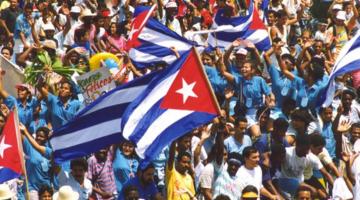 Condemnation of the U.S. blockade against Cuba must be translated into acts of solidarity to defend the nation that has done so much for the world.
 In this week’s segment we hear about Cuba, the challenges of Caribbean unity, and resistance to U.S. efforts to destroy the revolution. But we begin with Iran and discuss how its defense capabilities…
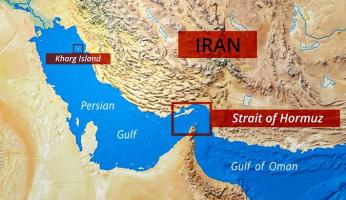 Iran is a more formidable foe than the US anticipated. The U.S. goal of regime change failed because of Iran's military power and determination to defend itself. In Washington the "Secretary of War"…
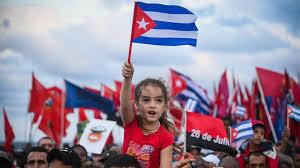 The United States has attempted to defeat the Cuban revolution from its earliest days and for more than 60 years has embarked on sabotage, economic coercive measures, and now a three-month long…
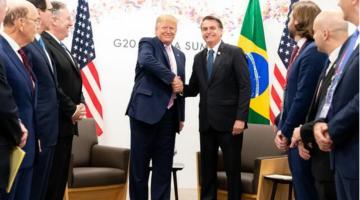 It’s up to Americans to stop the Trump administration from using U.S. power to strong‑arm Brazil and interfere in their elections.