Western cameras frame this as Israel vs. Iran, but African analysts see through the script: another case of ‘rules for thee, not for me’ in a system built to punish the Global South.
Originally published in Raïs Neza Boneza.
The escalating conflict between Israel and Iran, characterized by recent airstrikes and missile exchanges, has reverberated across the globe, including in Africa. African nations, while geographically distant, are deeply affected by the economic, humanitarian, and geopolitical implications of this crisis.
African nations have responded to the Israel-Iran conflict with a spectrum of positions, reflecting their diverse political, economic, and historical contexts. South Africa has been a prominent voice, condemning Israel’s airstrikes on Iran as violations of international law. This stance aligns with its longstanding support for Palestine, evidenced by its December 2023 case before the International Court of Justice (ICJ), accusing Israel of breaching the 1948 UN Genocide Convention (South Africa ICJ Case). President Cyril Ramaphosa has expressed deep concern over the conflict’s escalation, particularly following U.S. approval of Israel’s actions, urging a peaceful resolution (South Africa Peace Call).
Sudan and Mauritania have also denounced Israel’s strikes. Sudan labelled them “unjust aggression,” reflecting fears that its alleged ties with Iranian-backed factions could draw it into broader regional tensions. Mauritania, meanwhile, condemned the strikes as an “attack on Iranian sovereignty and a violation of the UN Charter,” with protests outside the U.S. embassy in Nouakchott signalling public discontent (Mauritania Protests). These responses highlight African sensitivity to issues of sovereignty, a recurring theme given the continent’s colonial history and ongoing struggles against external interference.
In contrast, countries like Morocco, Rwanda, Côte d'Ivoire, Cameroon, and Ethiopia have remained largely silent or issued muted responses. Morocco’s silence is notable, given its normalization of relations with Israel in 2020 under the Abraham Accords, which facilitated cooperation in defence, cybersecurity, and trade (Morocco-Israel Ties). Rwanda, with longstanding ties to Israel in intelligence and agricultural technology, similarly avoids public criticism, likely to preserve strategic partnerships. This silence reflects a delicate balancing act, as these nations navigate domestic sentiments and international alliances.
The African Union (AU) has taken a collective stance, expressing “deep concern” and calling for “maximum restraint” to prevent further escalation. The AU’s statement warns of the conflict’s threat to international peace and security, underscoring Africa’s stake in global stability (African Union Statement). Other nations, including Kenya, Nigeria, Benin, Algeria, Senegal, and Guinea-Bissau, have issued measured statements urging de-escalation and dialogue, reflecting a broader African preference for diplomatic solutions (New Arab Explainer).
The Israel-Iran conflict has tangible economic consequences for African nations, highlighting their vulnerability to global disruptions. In Nigeria, fears of disrupted oil supplies have driven petrol prices above ₦900 ($0.58) per Liter, exacerbating economic pressures on citizens already facing inflation and currency challenges. Egypt, reliant on Israeli gas imports, has seen a significant reduction in supply following Israel’s closure of the Tamar gas field on June 13, 2025, resulting in a daily loss of 800 million cubic feet of gas. This prompted Egypt to activate an emergency energy plan to mitigate the impact (Egypt Gas Supply). These economic challenges underscore the interconnectedness of global energy markets and Africa’s dependence on stable international trade.
The humanitarian toll of the conflict, while primarily affecting the Middle East, has broader implications for Africa. The conflict has resulted in hundreds of deaths and thousands of injuries in Iran, with disruptions to normal life and infrastructure (African Union Statement). The UN has warned that the conflict is deepening crises in other regions, such as Afghanistan, where humanitarian needs are already acute (UN News Afghanistan). For Africa, the potential for increased refugee flows, regional instability, or diverted international aid raises concerns, particularly for nations already hosting displaced populations or recovering from conflicts.
African perspectives on the Israel-Iran conflict often highlight the perceived failures of international institutions and biases in global media narratives. The United Nations, despite calls for restraint from Secretary-General António Guterres, has been unable to halt the escalation, reinforcing African scepticism about its effectiveness (UN Call Ignored). This mirrors longstanding African frustrations with global governance structures, which are often seen as prioritizing Western interests over those of the Global South.
Western media narratives, dominated by outlets like CNN and BBC, are criticized for framing the conflict in simplistic “good vs. bad” terms, often ignoring historical complexities such as the 1948 Palestinian Nakba or Iran’s post-1979 geopolitical stance. African analysts argue that these narratives lack nuance and fail to capture the moral equivalence of both sides’ grievances. For instance, the historical context of Israel’s nuclear capabilities, contrasted with Iran’s adherence to the Non-Proliferation Treaty, underscores perceived double standards in international law enforcement. This resonates with African nations, many of which face similar disparities in global power dynamics.
Therefore, the Israel-Iran conflict is part of a broader geopolitical shift, with the Global South, including Africa, increasingly questioning Western dominance. Some African nations are aligning with non-Western powers like Russia and China, who support Iran, as a counterbalance to U.S. and European influence. This realignment reflects a growing desire for sovereignty and equitable partnerships, as African nations seek to assert their role in a multipolar world. The conflict thus serves as a litmus test for Africa’s positioning in global affairs, with countries navigating complex alliances to protect their interests.
However, this shift poses challenges. African nations must balance relations with Western powers, which provide significant development funding, and emerging powers offering alternative partnerships. The silence of some African nations may reflect this strategic calculus, as they avoid alienating key allies while addressing domestic pressures.
A mediatic vital framework is needed in covering the Israel-Iran conflict; it must emphasize on conflict resolution, human impacts, and diverse perspectives over sensationalized violence. By focusing on diplomatic efforts, such as Egypt’s mediation attempts or the African Union’s call for restraint, this can highlight pathways to de-escalation. It also amplifies African voices, which bring unique insights from the continent’s own experiences with conflict resolution and reconciliation, such as post-apartheid South Africa or peace processes in the Sahel.
Moreover, the human cost of the conflict should be addressed, including its economic ripple effects in Africa and the potential for broader instability. By countering Western media’s binary narratives, the covering of these conflicts must foster empathy and understanding, encouraging a global discourse that prioritizes dialogue over division.
The Israel-Iran conflict, viewed through an African lens, reveals a continent deeply engaged with the global implications of this crisis. From South Africa’s principled condemnation to the economic challenges faced by Nigeria and Egypt, African responses reflect a nuanced understanding of the conflict’s stakes. The African Union’s call for restraint and the diplomatic efforts of countries like Egypt underscore a commitment to peace, rooted in the continent’s own history of overcoming conflict.
The African perspectives on these conflicts in general highlight diplomatic solutions, and address the human and economic costs of the conflict. Its advocate for a more equitable and peaceful world order, where all the voices are heard and respected.
Raïs Neza Boneza is a Congolese-Norwegian writer, poet, peace researcher, and activist born in the Katanga province of the Democratic Republic of Congo. He is known for his literary works and advocacy focusing on peace, human dignity, and social healing. He works also as a freelance journalist and consultant for NGOs, focusing on human rights and artistic resilience.

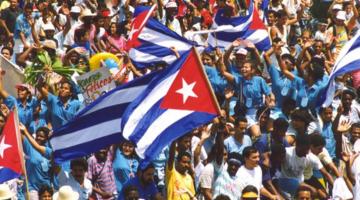 Condemnation of the U.S. blockade against Cuba must be translated into acts of solidarity to defend the nation that has done so much for the world.
 In this week’s segment we hear about Cuba, the challenges of Caribbean unity, and resistance to U.S. efforts to destroy the revolution. But we begin with Iran and discuss how its defense capabilities…
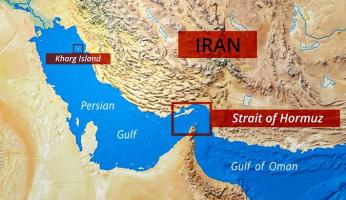 Iran is a more formidable foe than the US anticipated. The U.S. goal of regime change failed because of Iran's military power and determination to defend itself. In Washington the "Secretary of War"…
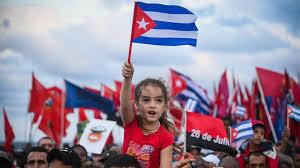 The United States has attempted to defeat the Cuban revolution from its earliest days and for more than 60 years has embarked on sabotage, economic coercive measures, and now a three-month long…
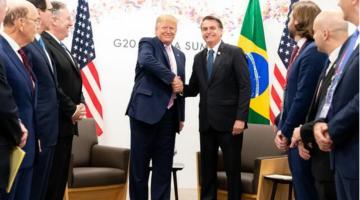 It’s up to Americans to stop the Trump administration from using U.S. power to strong‑arm Brazil and interfere in their elections.