Rosalino Flores died two months after being shot during a protest against Peru's coup government. (Image: elbuho.pe)
Rosalino Flores is just one of the Peruvians who died in the struggle against the coup government. Clau O'Brien Moscoso continues her dispatches from Peru. A Spanish translation follows.
National Strike, Day 82
Perú continues to face crises upon crises over 100 days since the coup regime ousted democratically elected President Pedro Castillo. The masses have remained mobilized in the streets and delegations from various regions throughout the country continue coming to the capital city to overturn this dictatorship, as well as to reinforce their local struggles and blockades. Despite a long battle in the hospital, a young person lost his life at the hands of this regime. This past Friday also marked the victory of an indigenous campesino community in Cusco from being evicted from their ancestral lands.
After two agonizing months in the ICU, 22 year old Rosalino Flores Valverde became the latest martyr of the Peruvian coup regime. Flores was shot 36 times with lead pellets from behind and at close range in anti-coup demonstrations in Cusco on January 11th, taken to a hospital in the city of Cusco and subsequently transferred to Hospital Arzobispo Loayza in Lima where he was pronounced dead on March 21st. The family of the young gastronomy student held a wake and vigil in his honor in Lima before taking the body to his final resting place in their home of Cusco, where the military occupied the airport as the community received his body in mourning.
The family demands justice for Rosalino and to know the identity of the police that cowardly killed him. Rosalino’s brutal death is just one example of the shoot to kill orders and force the Peruvian National Police and Peruvian Military are using against unarmed protesters. Juan Jose, Rosalino’s brother, who was also at the protest in Cusco, described how his brother was shot and the pain he went through in the ICU:
My brother was a good brother, a good friend. The police shot him from behind, from approximately 2-3 meters away. He received 36 shots that affected all of his vital organs. He stayed in the hospital in Cusco until 1/22/23 when he was transferred to Lima. He couldn’t eat from his mouth. He didn’t have the function of his intestines, and what hurts me the most was being by his side as he cried out, “I want to eat, brother.”
According to the lawyer, “The doctors there told me that they have removed almost 60 percent of his intestines. The shots had also affected the lung, the kidney, and also the small intestine and the large intestine.” As with 50 other Peruvians, Flores was shot at close range in his abdomen, a practice which is causing serious injuries and fatalities. Family members and supporters carried his coffin to various parts of the capital city in procession and as a peaceful march to honor the young martyr’s life. As with other marches, police in riot gear stayed not far behind. Two days later, Flores’s casket arrived in Cusco as armed forces occupied the airport.
A few days later on March 24, over 1,000 people (220 families) of the indigenous community of Tantacalla, Paruro, Cusco were at risk of being evicted from their ancestral lands after a former landowner, Luis Paz Vizcarra, sued them over rights to the territory. After 10 years and 6 previous attempts to displace this community, the courts sided with the comuneros (co-proprietors, or commoners) who had erected road blockades in anticipation of being forced off their lands.
The former landowner was suing for 5 million soles (or roughly $1.3 million) in a case that the lawyer representing the comuneros said has very little evidence aside from the landowner’s testimony whereas her clients have land rights as indigenous people. “This violates the right of ancestral territories, protected by national and international human rights instruments. In addition, it can generate, in the current circumstances that the country is experiencing, high social and humanitarian costs,” says Miguel Jugo, deputy executive secretary of the CNDDHH (National Coordinator of Human Rights). A thousand officers were dispatched to the area to begin removing them from the land when the courts ruled in their favor. As the President of the Tantacalla community David Quispe said, “muerte o tierra, así es” (death or land, that’s all). The community says they will remain vigilant and next month the judge has called for resolution through dialogue. But until then, they remain on their ancestral lands.
** Spanish translation**
“Muerte o Tierra”: La muerte de Rosalino Flores y Comuneros Ganan la Lucha por la Tierra, se Mantienen Vigilantes
Paro Nacional, Día 82
Perú continúa enfrentando crisis tras crisis durante más de 100 días desde que el régimen golpista derrocó al presidente democráticamente electo Pedro Castillo. Las masas se han mantenido movilizadas en las calles y delegaciones de diversas regiones del país siguen llegando a la capital para derrocar esta dictadura, así como para reforzar sus luchas y bloqueos locales. A pesar de una larga batalla en el hospital, un joven perdió la vida a manos de este régimen. Este viernes pasado también marcó la victoria de una comunidad indígena campesina en Cusco de ser desalojada de sus tierras ancestrales.
Después de dos angustiosos meses en la UCI, Rosalino Flores Valverde, de 22 años, se convirtió en el último mártir del régimen golpista peruano. Flores recibió 36 disparos con perdigones de plomo por la espalda y de cerca en manifestaciones antigolpistas en Cusco el 11 de enero, fue trasladado a un hospital de la ciudad de Cusco y posteriormente trasladado al Hospital Arzobispo Loayza de Lima donde fue declarado muerto el 21 de marzo. La familia del joven estudiante de gastronomía realizó un velorio y vigilia en su honor en Lima antes de llevar el cuerpo al lugar de descanso final en Cusco, donde los militares ocuparon el aeropuerto mientras la comunidad recibía su cuerpo en luto.
La familia exige justicia para Rosalino y conocer la identidad de los policías que cobardemente lo mataron. La brutal muerte de Rosalino es solo un ejemplo de las órdenes de disparar a matar y la fuerza que la Policía Nacional del Perú y las Fuerzas Armadas del Perú están utilizando contra los manifestantes desarmados. Juan José, el hermano de Rosalino, quien también estuvo en la protesta en Cusco, describió cómo le dispararon a su hermano y el dolor que pasó en la UCI:
Mi hermano era un buen hermano, un buen amigo. El policía le disparó por la espalda, desde aproximadamente 2-3 metros de distancia. Recibió 36 disparos que afectaron todos sus órganos vitales. Permaneció en el hospital de Cusco hasta el 22/01/23 cuando fue trasladado a Lima. No podía comer de su boca. No tenía la función de sus intestinos, y lo que más me dolía era estar a su lado mientras gritaba: “Quiero comer, hermano.”
Según el abogado, “los doctores de allá me dijeron que le han sustraído casi el 60 por ciento de sus intestinos. También los disparos le habían afectado lo que es el pulmón, el riñón, y también el intestino delgado y el intestino grueso.” Al igual que otros 50 peruanos, Flores recibió disparos de atrás y en el abdomen, práctica que está causando graves lesiones y muertes. Familiares y simpatizantes llevaron su cofre a varios puntos de la ciudad capital en procesión y marcha pacífica para honrar la vida del joven mártir. Al igual que con otras marchas, la policía con equipo antidisturbios no se quedó atrás. Dos días después, el ataúd de Flores llegó a Cusco donde las fuerzas armadas ocuparon el aeropuerto.
Unos días después, el 24 de marzo, más de 1.000 personas (220 familias) de la comunidad originaria de Tantacalla, Paruro, Cusco estaban en riesgo de ser desalojadas de sus tierras ancestrales luego de que un ex hacendado, Luis Paz Vizcarra, los demandó por derechos al territorio. Después de 10 años y 6 intentos previos de desplazar a esta comunidad, los judiciales se pusieron del lado de los comuneros que habían levantado bloqueos de carreteras en previsión de ser expulsados de sus tierras.
El antiguo terrateniente estaba demandando por 5 millones de soles (o aproximadamente $1,3 millones) en un caso que, según el abogado que representa a los comuneros, tiene muy pocas pruebas, aparte del testimonio del terrateniente, mientras que sus clientes tienen derechos sobre la tierra como indígenas. “Esto viola el derecho a los territorios ancestrales, protegido por instrumentos nacionales e internacionales de derechos humanos. Además, puede generar, en las circunstancias actuales que vive el país, altos costos sociales y humanitarios”, dice Miguel Jugo, secretario ejecutivo adjunto de la CNDDHH (Coordinadora Nacional de Derechos Humanos). Se enviaron mil oficiales al área para comenzar a sacarlos de la tierra cuando los tribunales fallaron a su favor. Como dijo el presidente de la comunidad de Tantacalla, David Quispe, “muerte o tierra, así es”. La comunidad dice que permanecerán vigilantes y el próximo mes el juez ha pedido una resolución a través del diálogo. Pero hasta entonces, permanecen en sus tierras ancestrales.
Clau O'Brien Moscoso is an organizer with the Black Alliance for Peace in the Haiti/Americas Team. Originally from Barrios Altos, Lima, she grew up in New Jersey and now lives between both countries.

 In this week’s segment, we discuss the impact on the voting rights of Black people if the SAVE Act is signed into law. But we begin with a discussion of an historic vote at the United Nations which…
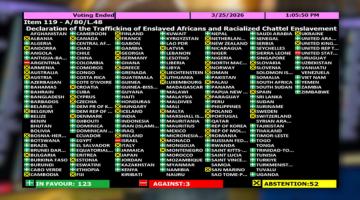 Kwesi Pratt Jr. is General Secretary of the Socialist Movement of Ghana.
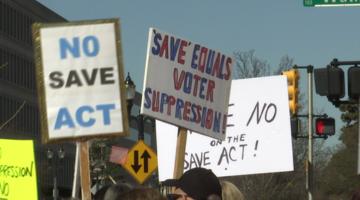 The SAVE Act would require proof of U.S. citizenship to be presented in person in order to register to vote in this country and would disenfranchise millions of people who are currently able to vote…
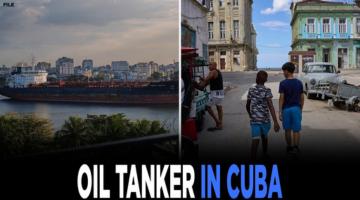 Russia finally makes good on promises to help Cuba, but its level of commitment is unclear. The left are clearly immobilized, even as Iran demonstrates how to fight back.
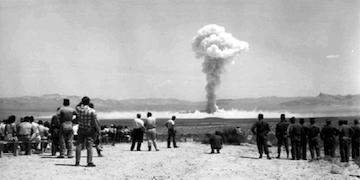 “We are not freeing ourselves from centuries of imperialism and colonialism only to be maimed and destroyed by nuclear weapons.”