To dismiss revolutionary theory is to choose permanent defeat, reducing the movement to a hamster wheel of reaction and co-opted rage.
There is widespread disunity and a lack of clarity among the masses about who we are fighting, why, and how we can defeat them. There is no common struggle for common goals because we are not clear on who our common enemies are, why they are at war with us, and how they carry out that war. This fractured reality in the U.S. is largely due to the lack of importance placed on understanding revolutionary theory.
Some mistakenly believe that studying theory is a pointless academic exercise that movement leaders use to intimidate or control young organizers. Or others believe that it is something that out-of-touch and old movement veterans who are no longer engaged in the real work of organizing focus on, or that those who do not actually want to do any real work obsess over, rather than the work that needs to be done.
However, reading and understanding theory is key to organizing. It is the backbone that makes the work strategic, effective, and sustainable. Without understanding theory and the history that shaped it, there is no fundamental understanding of what is to be done. But this is not clear because people may misunderstand what theory itself is.
Theory is not an educated guess or a hypothesis that precipitates tests to prove or disprove it, as in scientific theory. Theory is a set of ideas and principles that comes when one observes and analyzes facts and then seeks to answer the questions: “Why, how, and who causes this to happen?” Theory helps determine potential actions or outcomes by identifying cause and effect through observing patterns in material realities, providing a lens for interpreting the world and making informed decisions.
So, in science, the Theory of Evolution is not a guess about how evolution happens, but an explanation of how evolution happens based on observations and the study of data. Marxist Theory is the analysis of class conflict in the context of social economics. Critical Race Theory analyzes the way systemic racism is institutionalized through laws, policies, and practices. None of these theories are guesses about these topics, but the outcome of analysing them.
Theory helps us name exactly what we are fighting. It is what allows us to move beyond general concerns about poverty to understanding what causes and maintains poverty, which are capitalism, classism, white supremacy, patriarchy, and imperialism. This helps us focus on these dynamics that create poverty, rather than putting a band-aid on the problem and leaving the cause untouched.
Without theory, reform policies are usually identified as the answer to problems. For example, in the case of concerns about poverty, the reform might be to campaign for a higher federal minimum wage, which is undoubtedly necessary, considering it has been a paltry $7.25 an hour since 2009, while the cost of living has increased at a much higher rate. But with theory, people understand that raising the federal minimum wage alone is not enough to solve poverty, because they are fighting against the exploitative class dynamics of capitalism itself, not just the lack of an adequate minimum wage. Theory does not rule out the need for reforms to provide immediate relief or correction in some cases. Instead, it helps explain why reforms are insufficient to address conditions.
Additionally, theory helps identify the key structures of power, how they are connected, who the primary decision-makers/players are within, how they are organized, and where they are most vulnerable. This is the map of organizing for social change that theory helps to chart. From this map come the strategy and tactics that move spontaneous or individual outrage into organized, calculated, strategic action to challenge the system that produces these conditions.
Analyzing the problems we face through the lens of theory helps a group of people from different backgrounds, life experiences, and even social statuses develop a shared framework and vocabulary to understand and communicate complex ideas efficiently and build a cohesive strategy. Through this approach, clear goals are developed, along with the strategies and tactics to achieve them. When a movement's goals are not clearly defined by a deep analysis of the real problem, they are easily co-opted. Demands are watered down into insufficient reforms that leave the core system intact. A solid theoretical foundation helps the movement hold its line, distinguish allies from adversaries, and remain focused on its long-term goals.
Theory also connects today’s work with the history of people’s struggles, helping today’s organizers learn from the past because theory is the condensed lessons of past struggles. The analysis of the systemic issues of the past and people’s responses to them is an integral part of the analysis of the problems being addressed today. There is no way to conduct an accurate analysis of the present issues without understanding the history that preceded and contributed to them.
By studying the theories that emerged from the Haitian Revolution, the Paris Commune, the Russian Revolution, the Chinese Revolution, Black liberation movements, and other anti-colonial struggles, organizers learn what tactics worked, what tactics did not, how movements were betrayed, how hierarchies re-emerged, and other questions that give insight into how to build more resilient structures. We cannot fully and effectively answer the question, "What Is To Be Done?" about today’s issues, without understanding the history of revolutionary theory. Without it, organizers today spend valuable time reinventing the wheel, repeating past mistakes that previous organizers documented so we would not repeat them, building structures with little protection from both external infiltration and internal division and collapse, and ultimately tilting at windmills with no direction, strategy, or real goal.
The reactionary response, as in only being in a position to respond to an impetus rather than implement forward-thinking plans to grow the movement and advance the struggle, creates an environment where everything is treated as an emergency when there are regular internal and external fires to put out, and organizers become quickly susceptible to burnout. All of their energy is focused on addressing problems and crises that their lack of theoretical clarity made space for. So the utility of theory in the crucible of revolutionary organizing today is that it helps us understand that struggle is long and cyclical, with periods of advance and retreat, and not something one does only on one Saturday when people gather for a protest. Theory helps organizers maintain a long-term perspective, protecting against disillusionment that comes from expecting immediate victory from every effort. In a microwave-like, instant-gratification-focused, attention-span-truncated society like the U.S., understanding the long dureé of revolutionary struggle is vital for people to be prepared for it.
Understanding theory also helps organizers learn that the state and the ruling class have their own "theories" and playbooks for maintaining control. Theory teaches the methods of co-optation, divide-and-rule, repression, information control, and manipulation they use to discredit, weaken, and ultimately destroy people’s movements being waged against their oppressive, exploitative, imperialist power. Studying historical revolutionary theory helps organizers anticipate and identify these moves and develop counter-strategies against them.
Studying and being clear on theory also informs organizers that their mandate is not just to destroy the old, unjust, and unequal world, but to build a new one that is beneficial and supportive for all. Theory helps develop a vision of what that new society/world should look like. Revolutionary organizers must answer the questions for a future society about how decisions will be made, who will make them, how will the people participate in the process, how will resources be allocated, what will the social contract between the state and the people be, what will the relationship with other states, groups, peoples be? Theory helps us grapple with these questions to arrive at answers that meet the needs of the people, helping organizers create a vision for the next phase in the struggle. Without this vision, a movement can win an isolated, one-issue battle but have no idea what to do with its victory, often leading to a restoration of the old order or something worse.
In today’s A.I.-driven, meme-delivered, social media-encased information marketplace, where far too many people receive all their information, differentiating between truth and lies, fact and fiction, A.I.-slop and real information is important for everyone. But for organizers and others among the masses who may not think of themselves as such but are concerned about the current crises and want to “do something about them,” learning theory is an indispensable part of intentional, focused, long-term, and effective organizing.
Theory is not just for professional intellectuals and scientists. Academic and scientific theory exists and can be pretty esoteric for laypeople.. But revolutionary theory is meant to be a tool for the people. It should be studied collectively, debated openly in accessible language, and grounded in the material conditions of the people affected. The goal of studying theory is not to create an elite class of revolutionary theorists, but to equip every organizer with the power of analysis. Which is also important for protecting organizations from being neutralized by the state, taking out the leader(s) in some way. When all members of an organization are steeped in accurate theoretical analysis and clarity, the organization is not crippled by the absence of a single or small group of leaders.
And for those who insist that rather than focus on theory, the current crises are so urgent that we only have time for action, theory itself reveals that action without strategy, direction, and focused organization is easily sidetracked, co-opted, and crushed. But theory without action is also useless, so the relationship between the two is inseparable. They must continually inform and reinforce one another in a dialectical process. In effective organizing, there is no theory without practice, and there is no practice without theory.
If you are asking yourself in this historical moment whether you should be against fighting a single corrupt politician or fighting the political system that produces them; providing charity or building mutual aid as a challenge to the system's lack of provision; reacting to the latest crisis or executing a long-term plan to dismantle the source of the crises; or, some combination of all of this, then studying theory will not only help answer those questions, but will also provide insight into what strategies have worked in the past and which have not, the most beneficial alliances to make and those to avoid, and the discipline required to stay committed through the peaks and valleys of the struggle.
Studying theory is not about replacing action with book clubs, as those who refuse to study theory may claim.
It is about arming yourself for a long and difficult war for our liberation. Soldiers with no training cannot fight a war, let alone win it.
Jacqueline Luqman is a radical activist based in Washington, D.C.; as well as co-founder of Luqman Nation, an independent Black media outlet that can be found on YouTube (here and here) and Facebook.





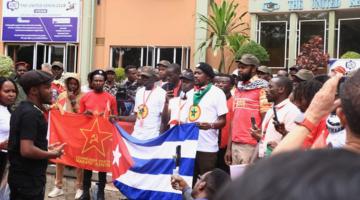 With the economic strangulation of Cuba by the United States, African progressive organizations and movements are calling for broader continental solidarity.
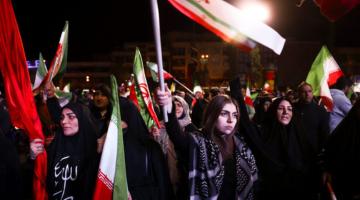 The U.S. has been temporarily rattled in its regime change effort against Iran. Iranian resistance, hubris on the part of the U.S., and Donald Trump’s personal instability combined to undo a twisted…
 A conversation focusing on U.S. actions against Iran explains why the imperialist drive for domination will actually lead to a superpower becoming much less powerful.
 “...it is like a knee-jerk reaction in the U.S – this consistent, insistent and persistent anti-Caribbean policy in the U.S. from 1776 to the present.”
 Most of the world would be at greater ease if Iran had a nuclear bomb.